Neighborhood: [Link to El Pueblo / Historic Park Neighborhood Hub]
Perfect for: Foodies, history lovers, and anyone wanting to experience the colorful cultural heart of LA.
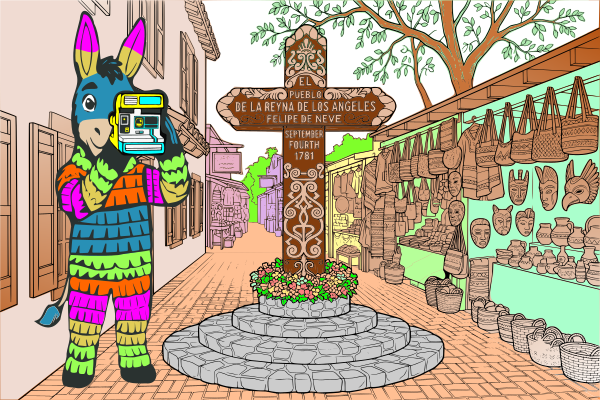
If you want to understand Los Angeles, you have to start where it all began. Tucked away right across from Union Station is Plaza Olvera (officially part of El Pueblo de Los Angeles Historical Monument). Today, it is a bustling, vibrant Mexican marketplace filled with the scent of fresh churros, mariachi music, and colorful hanging papel picado. But this small cluster of historic buildings holds the DNA of the entire city.
[Insert Video: Walking through the vibrant, colorful market stalls of Olvera Street]
Long before the skyscrapers of DTLA took over the skyline, Los Angeles was just a tiny farming village. In 1781, a group of 44 settlers—known as Los Pobladores—marched from present-day Mexico under orders from the Spanish government to establish a pueblo.
They set up camp right around this plaza. While the exact location of the original 1781 square shifted slightly due to flooding from the nearby Los Angeles River, this plaza became the absolute center of government, community, and social life during LA's Spanish and Mexican eras.
You don’t need a time machine to see old Los Angeles; you just need to walk around the square. The plaza is surrounded by some of the oldest structures in the county:
[Insert Photo: The grand, historic exterior of the Pico House overlooking the plaza]
By the 1920s, the glory days of the plaza were long gone. The wealthy families had moved away, the historic buildings were decaying, and the city was planning to bulldoze the entire area to build modern railyards and industrial buildings.
Enter Christine Sterling.
Sterling was a wealthy socialite who fell in love with LA’s Mexican heritage. Horrified by the decay, she launched a fierce, one-woman crusade to save the birthplace of the city. She teamed up with Harry Chandler (the powerful publisher of the Los Angeles Times) to raise money and completely reinvent the neglected alleyway next to the plaza—then called Wine Street—into an idealized, romanticized Mexican marketplace.
Renamed Olvera Street, it officially opened on Easter Sunday in 1930, instantly becoming a massive tourist attraction and saving the historic core of Los Angeles from destruction.
[Insert Photo/Video: A wide shot of the bustling central plaza tree line and the historic kiosk]
Surprising Tourist Fact: When Christine Sterling was struggling to find enough money to pave Olvera Street in 1929, she convinced the Los Angeles Police Department to provide her with prison labor. Local inmates were brought in to lay the iconic red brick paths that millions of tourists walk on today.
Want to explore the oldest house in LA and taste the best taquitos in the city?
Join me on a 2-hour walking tour with MarlonWalksLA. We will trace the footsteps of the original settlers, unlock the secrets of Olvera Street, and discover how a tiny pueblo grew into one of the biggest mega-cities on earth. [Click here to book your tour!]